The Igloo — A Great Game Isn't Enough to Save Its Studio
South of Midnight es uno de los juegos mejor reseñados de Game Pass — y aun así Compulsion Games podría no sobrevivir a Microsoft. La dura lección de hoy: un gran juego no basta para salvar al estudio que lo hizo. Además, CD Projekt Red apuesta la redención de Cyberpunk a The Witcher 4, demandan a Obsidian por supuestas violaciones salariales, el exjefe de IA de Take-Two advierte que el bombo de la IA generativa está 'envenenando el pozo', y nos despedimos del compositor de Doom, Bobby Prince.
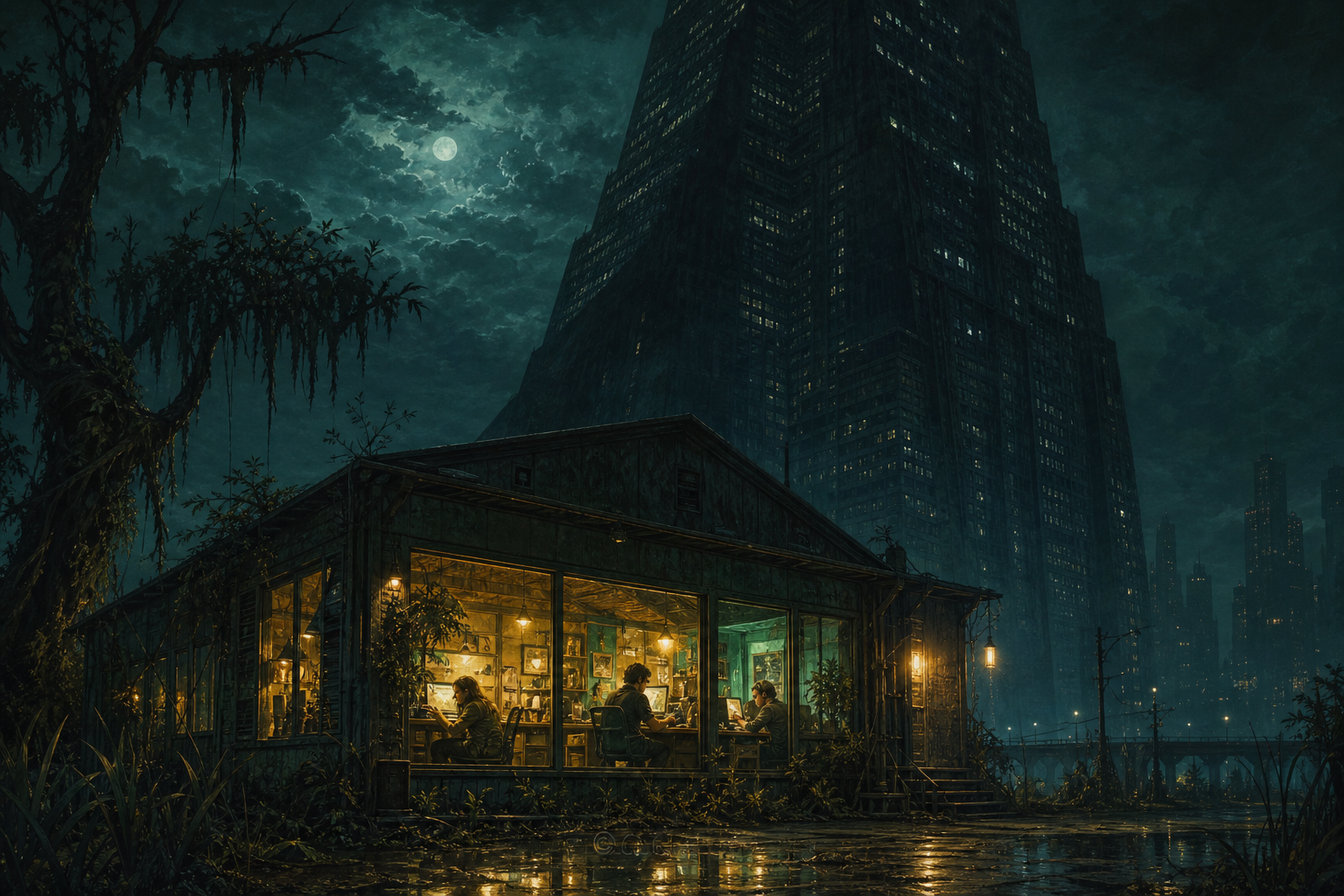
Friday, June 19, 2026. We swept the gaming wire today — a GTA pre-order countdown, a studio lawsuit, the passing of a man whose music you've hummed without knowing it — and the thread tying it all together is quieter and heavier than any single headline: a great game, it turns out, isn't always enough to save the studio that made it. Welcome to The Igloo.
This is the print twin of today's The Igloo episode, "When a Great Game Isn't Enough." Want it in your ears instead? Listen to today's edition.
The lead · A great game isn't enough to save its studio
This is the kind of story that sticks with you. South of Midnight — Compulsion Games' Deep-South folklore adventure — is, by Polygon's own reckoning, one of Xbox Game Pass's best games. It won awards. It got the reviews most studios spend a decade chasing. And the studio that made it is still reportedly in danger of being shut down by Microsoft.
Read that twice, because it breaks the deal we all quietly assumed we had with games: make something good, and you get to keep making things. In 2026 that deal is gone. Quality is the price of entry, not a guarantee of survival.
Why it matters to players
The games you love don't protect the people who make them. That's the uncomfortable part. When a studio behind a genuinely good, distinctive game can't count on a sequel — or a next job at all — you lose more than one team. You lose the weird, specific, hand-built games that only a particular group of people would ever have thought to make. South of Midnight is exactly that kind of game: stop-motion-styled, regionally rooted, unmistakably itself. The fear isn't that big publishers stop making games. It's that they stop greenlighting the small strange ones, because "critically acclaimed" no longer pencils out on a spreadsheet.
The craft angle
Compulsion isn't an isolated case — it's this week's clearest symptom. The same wire carried news that Marvel Contest of Champions studio Kabam is consolidating its LA office and cutting staff, one more entry in a year of contraction. The pattern underneath all of it: studios are being asked to absorb more and more risk while the upside concentrates at the platform layer. A great game used to be a studio's leverage. Increasingly, it's just the thing they delivered on the way to finding out whether they get to exist.
02 · CD Projekt Red bets its redemption on The Witcher 4
CDPR co-CEO Michał Nowakowski says the studio hasn't completed a "full redemption arc" after the "heartbreaking" launch of Cyberpunk 2077, and he's hoping The Witcher 4 is the game that wins fans back for good.
Our take. It's rare to hear a major studio still talk about a 2020 launch as an open wound, and that honesty is the most reassuring thing about it. Cyberpunk's years-long comeback was real — but you only get to spend that goodwill once. The Witcher 4 isn't just a sequel; it's CDPR asking whether players still trust them on day one. That's a heavier thing to ship than a game.
03 · Obsidian sued over alleged wage violations
Continuing the week's hard-news streak: Obsidian Entertainment — makers of The Outer Worlds 2 and Avowed — has been sued in California over alleged wage-and-hour violations, with the suit claiming a "systematic pattern" of them.
Our take. The allegations are unproven and Obsidian deserves a fair hearing. But it lands on the same theme as our lead: the economics of who actually carries the cost of making games. When the conversation is constantly about budgets and survival, labor disputes are the part of that story that doesn't make a trailer — and the part players should pay the most attention to.
04 · Take-Two's former AI chief: genAI hype is "poisoning the well"
For the AI-gamedev desk: Take-Two's former head of AI told Eurogamer that the generative-AI hype cycle is "poisoning the well" — and could sour players on all AI in games, including the traditional, non-generative kind that's quietly powered pathfinding and behavior for decades.
Our take. This is the sharpest framing we've heard of a real risk. Games have used "AI" forever; nobody protested the Halo Elites flanking them. The danger of overselling generative AI isn't just the slop — it's that "AI" becomes a slur, and the boring, useful, decades-old kind gets tarred along with it. After a week of developers pushing back on Epic's genAI direction, hearing it from inside the industry's own AI ranks is worth sitting with.
One more thing
We have to close on a goodbye. Bobby Prince, the composer behind Doom and Duke Nukem 3D, has died at 81. If you've ever felt your pulse jump to E1M1, that was him — and earlier this year his Doom soundtrack was selected for preservation in the Library of Congress, a rare official acknowledgment that game music is culture worth keeping. On a day about studios fighting to survive, here's a reminder of why it matters: the work outlives the business. Go put on the Doom soundtrack tonight. He earned the volume.
That's today's Igloo — the day's games, and what's really happening to the people who make them. The full episode, "When a Great Game Isn't Enough," is up now: listen to today's edition.
Sources: Polygon — South of Midnight / Compulsion · Game Developer — Kabam layoffs · IGN — CD Projekt Red on Witcher 4 · Rock Paper Shotgun — Obsidian lawsuit · Eurogamer — Take-Two ex-AI head on genAI · IGN — Bobby Prince obituary · VGC — Bobby Prince / Library of Congress