Cold Open — Claude lands on Blackwell Ultra in Azure
Claude de Anthropic llega en disponibilidad general a la propia infraestructura Azure de Microsoft, corriendo sobre los GPU GB300 Blackwell Ultra de NVIDIA — la historia dominante de hoy. Además: un modelo de pesos abiertos que arma su propio flujo de programación, y el manual de NVIDIA para gobernar agentes autónomos. Más tendencias en dev tools, la ola de agent skills y un dato curioso desde la órbita lunar.
🎧 This is the print twin of today's Cold Open episode. Listen to today's episode.
Tuesday, June 30, 2026. We scanned 3,369 items off the overnight wire; three made the front page — and one of them is three of the biggest names in the stack landing in the same place at once. Latent Space called it "a quiet day before the storm." Maybe. But where the model, the cloud, and the chips converge is rarely quiet for long.
The lead · Claude lands on Blackwell Ultra in Azure
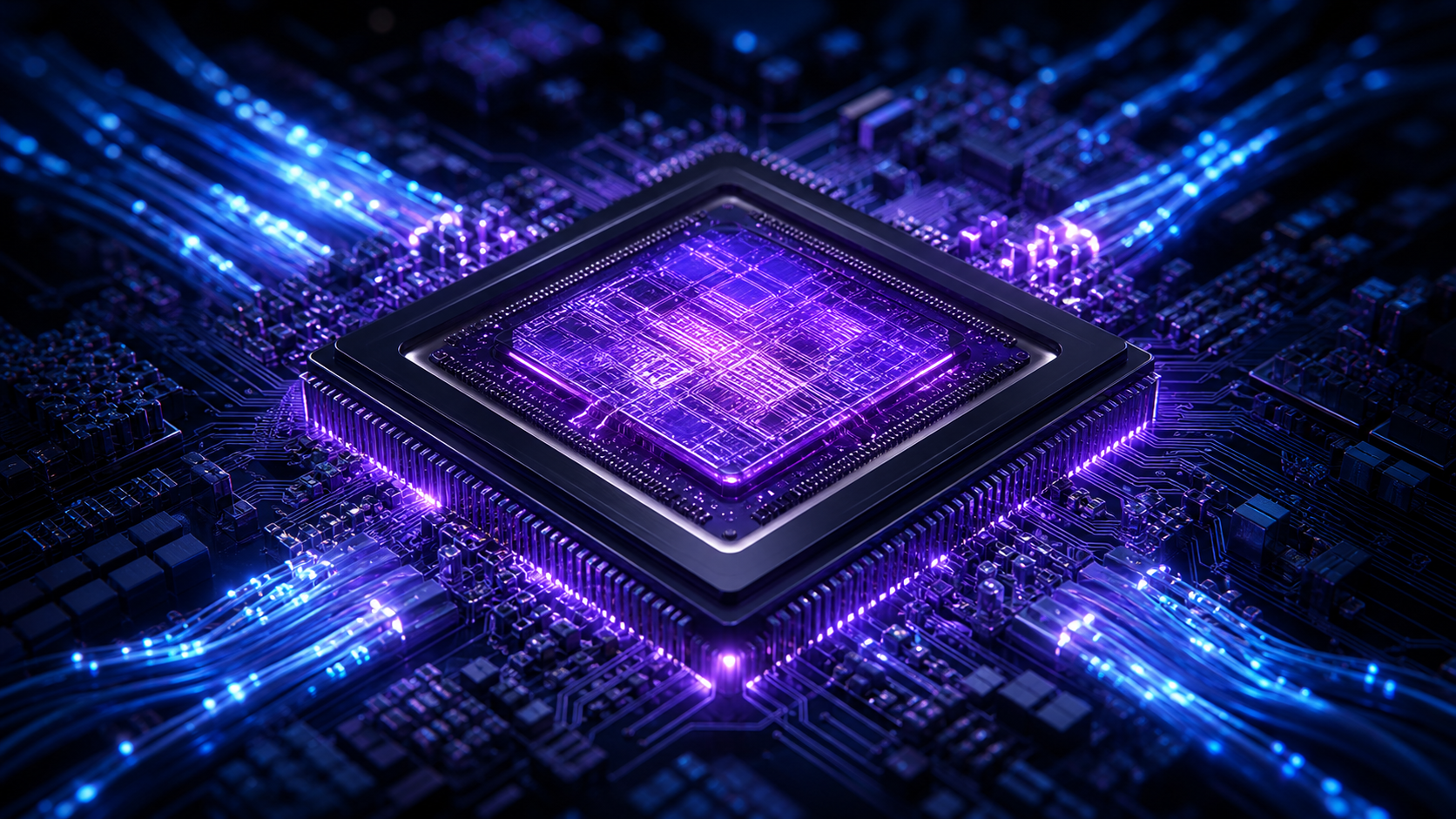
Anthropic's Claude is now generally available in Microsoft Foundry, hosted on Microsoft's own Azure infrastructure and running on NVIDIA GB300 Blackwell Ultra GPUs. NVIDIA frames it plainly: this gives "Azure-native enterprises a powerful new way to build autonomous and domain-specific AI agents." Two models are live today — Claude Opus 4.8 and Claude Haiku 4 — reachable through the Messages API with prompt caching, extended thinking, and tool streaming, plus a Foundry Agent Service that uses Claude as the reasoning core for multi-step planning and tool use.
"Anthropic's Claude models in Microsoft Foundry — hosted on Microsoft Azure and running on NVIDIA GB300 Blackwell Ultra GPUs — are now generally available." — NVIDIA Technical Blog
What is genuinely new here is the end-to-end part. Per Microsoft, this is the first time Anthropic's frontier models run start-to-finish on Microsoft's own accelerated infrastructure, with Quantum-X800 InfiniBand networking stitching together the larger agentic systems and specialized sub-agents that enterprises are starting to deploy. It builds on the three-way Microsoft–NVIDIA–Anthropic partnership announced back in November 2025.
Why it matters
For anyone building on the Microsoft stack, the friction just dropped. You can now reach Claude on the newest NVIDIA silicon without leaving Azure — same identity, same governance, same network. That collapses a real adoption barrier for enterprises that were never going to route tokens to a separate API. The deeper signal is the convergence itself: the model layer (Anthropic), the cloud layer (Microsoft), and the silicon layer (NVIDIA) are no longer three negotiations. They are one product you can switch on. When agents run for hours and fan out into sub-agents, the bottleneck stops being "which model" and becomes "how much governed compute can I point at it" — and that is exactly the question this answers.
The fine print
Two caveats before you re-architect around it. First, the headline numbers are vendor numbers — NVIDIA and Microsoft announcing NVIDIA-and-Microsoft infrastructure, with no independent latency, throughput, or price-per-token benchmarks published yet. "Generally available" also doesn't mean every region or SKU; enterprise pricing terms aren't in the announcement. Second, only Opus 4.8 and Haiku 4 are live at launch — if your stack leans on Sonnet, you're waiting. Treat this as a distribution and compute story, not a capability one: the models are the models you already know, now sitting somewhere new.
Sources: blogs.nvidia.com · azure.microsoft.com
02 · An open model that scaffolds its own coding workflow
DeepReinforce released Ornith-1.0, an open-weights (MIT-licensed) family of models built for self-scaffolding agentic coding — the model assembles its own workflow rather than waiting for a hand-written harness. It ships in 9B and 31B dense variants plus 35B and 397B mixture-of-experts, built on top of pretrained Gemma 4 and Qwen 3.5 (both Apache 2.0, so the licensing checks out), and claims state-of-the-art results among open models of comparable size on coding benchmarks. Simon Willison, who has been running it hands-on, flagged it as "an interesting new open weights model."
Why it matters. The open ecosystem keeps closing the gap on closed coding agents — and it's doing it on the part that's hardest to replicate, the agent loop, not just raw model quality. An MIT-licensed model that scaffolds its own steps is something a team can run inside its own walls and inspect end to end. Worth a caveat: the benchmark claims are the lab's own, and "SOTA among open models its size" is a narrower bar than the frontier.
Sources: simonwillison.net
03 · NVIDIA writes the rulebook for autonomous agents
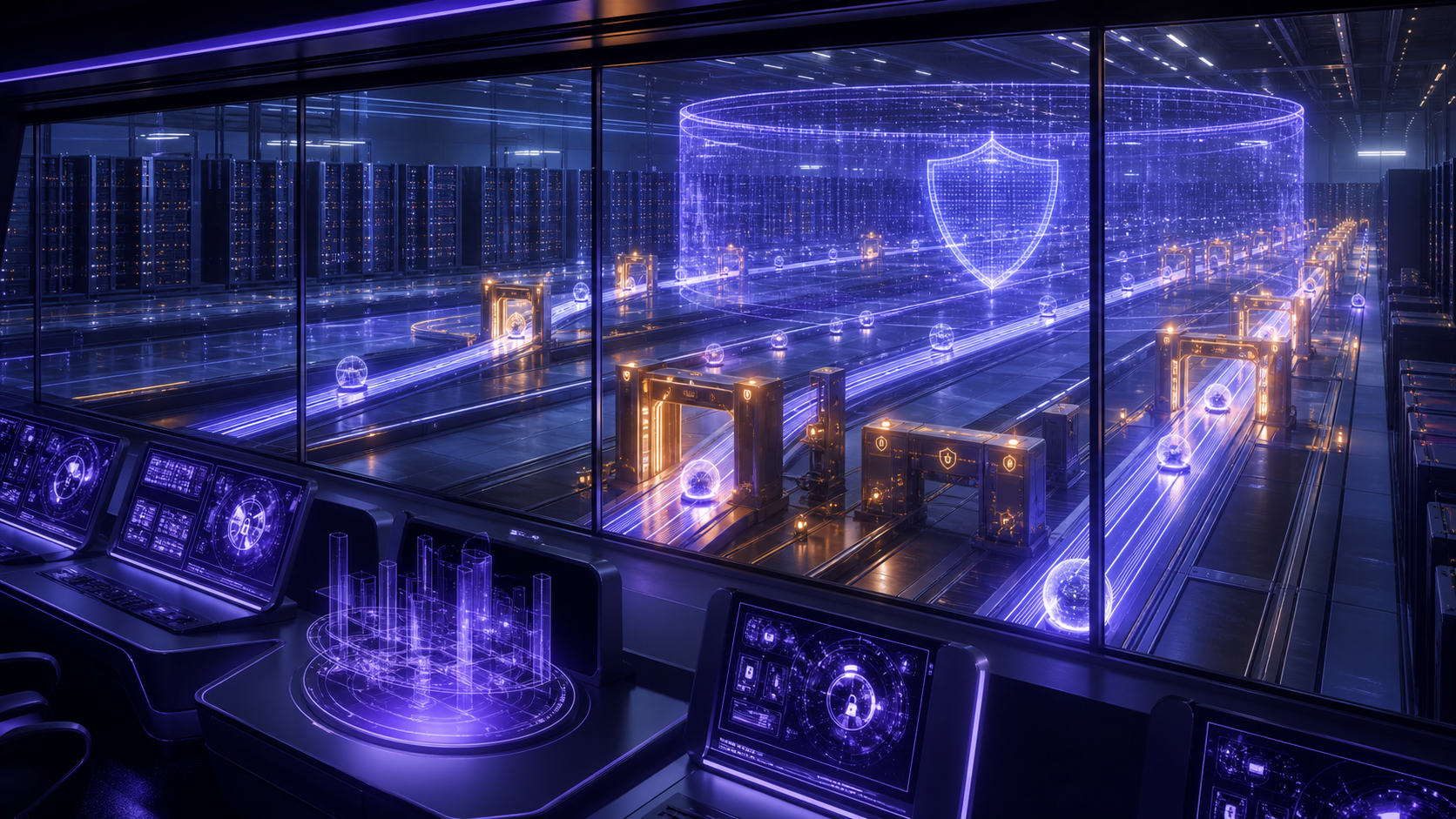
As agents move "beyond chat" — inspecting code, running tests, querying internal systems, and operating for hours at a stretch — NVIDIA published guidance on how to govern autonomous agents in enterprise "AI factories." It's the production-readiness conversation written down: identity, permissions, audit trails, and the controls you need before you let an agent touch real systems unattended.
Why it matters. Governance is quietly becoming the thing that gates agents into production, not capability. The labs solved "can the agent do it"; the open question on every enterprise floor is "can I let it." When the chip vendor starts shipping a governance playbook alongside the silicon, that's a tell about where the real friction now lives.
Sources: developer.nvidia.com
Also on the radar
- Physical AI — NVIDIA "Into the Omniverse": three workflows for improving vision-AI agent accuracy with synthetic data and fine-tuning — turning physical-world video into operational intelligence.
- Research — DiScoFormer: AllenAI's single transformer that handles both density and score across distributions.
- Self-evolving agents — Recursive Self-Evolving Agents via Held-Out Selection: a sober apples-to-apples look at agents that improve by evolving a natural-language artifact (reflections, playbooks, prompts) instead of weights.
- Quiet day, honestly — Latent Space summed up the wire in four words: "not much happened today."
Trends in dev tools
What moved in the tools engineers actually ship with.
- Evals are becoming first-class on the hubs. Hugging Face is now surfacing "Every Eval Ever" results directly on model pages — community benchmark numbers next to the download button, so you can size a model up before you pull it.
- Computer-use benchmarks are getting harder on purpose. OSWorld2.0 raises the bar on computer-use agents with long-horizon, real-world tasks — built to expose where frontier agents still break on multi-step desktop work.
- Read leaderboards with suspicion. A new audit, Pooled Leaderboards Hide System-Specific Winners, shows that a single pooled top-1 score can crown a "winner" that loses on the subsystem you actually care about. The pooled number is marketing; the per-task breakdown is the truth.
- The disposable-tool habit keeps spreading. Simon Willison shipped yet another tiny single-purpose utility — an HTML table extractor that converts pasted rich text into HTML, Markdown, CSV, or TSV. The pattern: when a tool is a five-minute ask, you build it instead of hunting for one.
Popular skills
The agent-skills wave — packaging expertise an agent can load on demand — showed up mostly in research today, which is itself a sign the pattern is maturing past the blog-post stage.
- Distilling skills from human demos. RESOURCE2SKILL turns human-created multimodal resources into executable agent skills — automating the part that's still mostly hand-written today.
- Skills that evolve themselves. Dynamo is a training-free framework for dynamic skill-and-tool evolution in vision-language agents — the skill library adapts a frozen model without retraining.
- Better search through skill banks. SearchSkill teaches LLMs to use search tools via evolving skill banks, focusing on whether the model issues good queries, not just whether it searches.
AI fun fact
An NVIDIA Jetson edge-AI module is now running in orbit around the Moon — a first. Firefly Aerospace operated a Jetson in lunar orbit for the first time, putting the same class of compute that powers robots and vision agents on factory floors a quarter-million miles from the nearest data center. Edge AI, taken about as literally as it goes.
Sources: blogs.nvidia.com · azure.microsoft.com · simonwillison.net · developer.nvidia.com · huggingface.co · arxiv.org