Cold Open — Google Drops Three Gemini Models in One Move
Google DeepMind lanza Gemini 3.6 Flash, 3.5 Flash-Lite y 3.5 Flash Cyber al mismo tiempo — el nivel Flash se volvió más rápido, liviano y especializado en seguridad. Además: la investigación de OpenAI sobre cómo la IA amplía lo que hacen los trabajadores, y NVIDIA Nemotron 3 Ultra toma la corona de los modelos de agentes de código abierto.

This is the print twin of today's Cold Open episode. Listen on The Penguin Alley.
Sunday, July 27, 2026. We scanned 199 items off the wire this morning. Three made the cut — and the lead is Google shipping three Gemini models at the same time.
The lead · Google ships three Gemini models at once
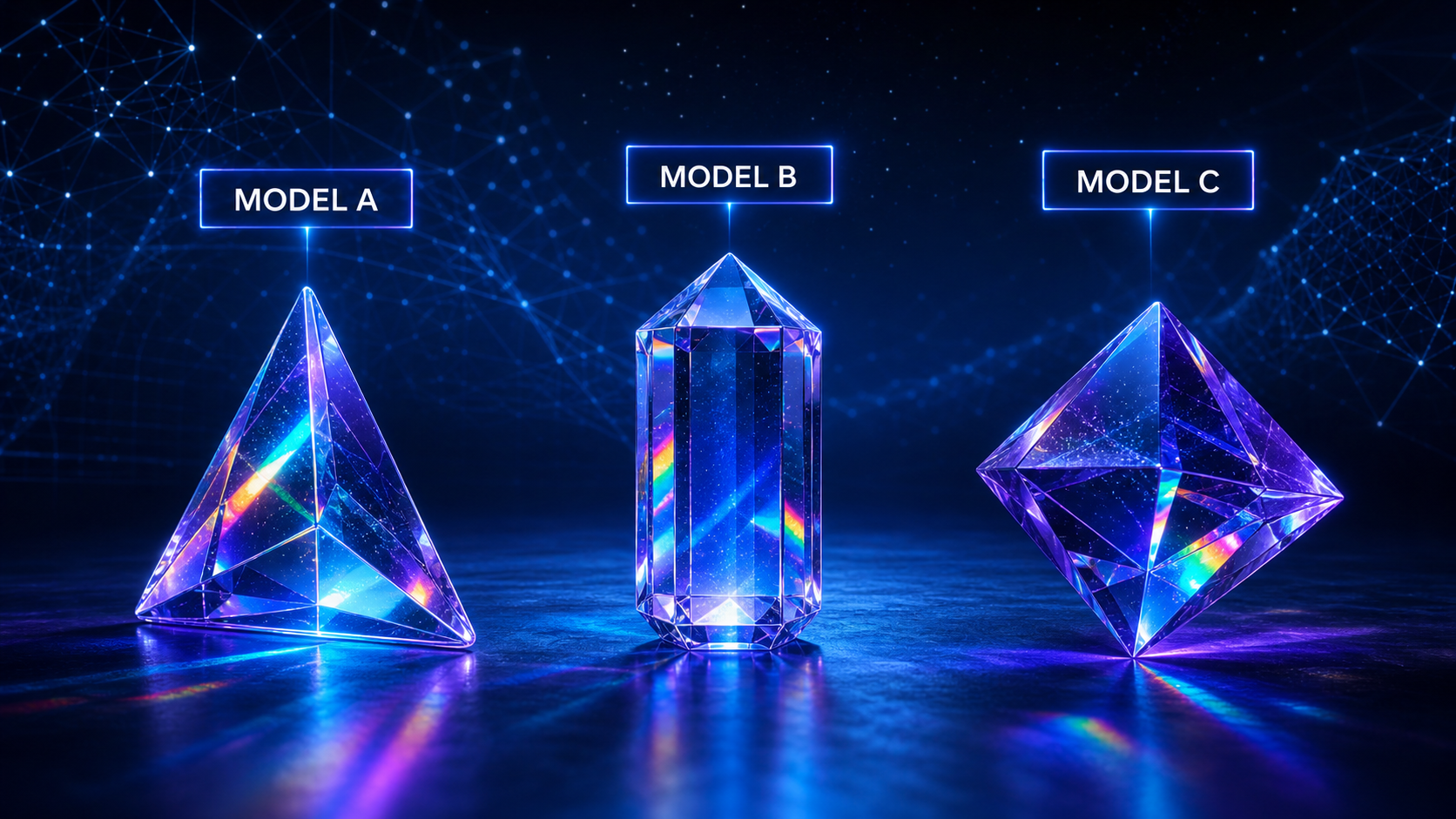
Google DeepMind dropped three new Gemini models in a single announcement: Gemini 3.6 Flash, Gemini 3.5 Flash-Lite, and Gemini 3.5 Flash Cyber.
"We're expanding the Gemini Flash family with new capabilities tailored for different workloads — from high-throughput API use to ultra-low-cost inference and specialized security tasks."
— Google DeepMind blog
Gemini 3.6 Flash is the updated workhorse of the Flash tier: faster throughput, tighter latency, aimed at the builder audience running millions of API calls. Gemini 3.5 Flash-Lite is the lightweight variant, optimized for constrained budgets where sub-cent-per-query economics matter — edge devices, high-volume pipelines, small-context classification tasks. Gemini 3.5 Flash Cyber is the most interesting: Google's first publicly announced security-specialized model, fine-tuned for adversarial analysis, vulnerability reasoning, and security-aware code review.
Why it matters
The Flash tier is already the default for most API-first builders — competitive on price, solid on speed. Three variants in one release signals Google is moving toward deliberate segmentation: one model for throughput, one for cost, one for domain. That third slot is the tell. A security-specialized model that ships under the Flash brand — not as an isolated research artifact — means Google is treating cybersecurity as a production workload, not a demo.
For builders: Flash-Lite opens the door to AI on workloads that were economically out of reach on Gemini Pro or standard Flash. Flash Cyber is worth a look for any team doing code security reviews at scale.
The fine print
Google's "faster" and "more efficient" claims refer to internal benchmarks at launch. Independent evals on diverse prompt sets will tell the real story. Gemini 3.5 Flash Cyber's security specialization is the claim that warrants the most scrutiny — security-domain fine-tuning can overfit to known vulnerability patterns while missing novel attacks. Real-world validation against diverse CVE sets and adversarial inputs is still the bar.
Sources: Google DeepMind blog — Introducing Gemini 3.6 Flash, 3.5 Flash-Lite, and 3.5 Flash Cyber
02 · OpenAI research: AI expands what people do at work, not just what they skip

OpenAI published new research examining how ChatGPT users are reshaping their own job scope. The finding: workers are taking on tasks that previously fell outside their role, using AI to bridge skill gaps and expand what they're able to deliver — not just automating away what they already did.
Why it matters. This is the evidence-based counterframe to the "AI eliminates jobs" narrative. If confirmed across larger samples, it reframes the policy question: from "how many jobs disappear" to "how do organizations support workers who are now doing more?" That's a different conversation — and a more productive one to have before citing the next layoff headline.
Sources: OpenAI — How AI is expanding what people do at work
03 · NVIDIA Nemotron 3 Ultra takes the open-model agentic crown
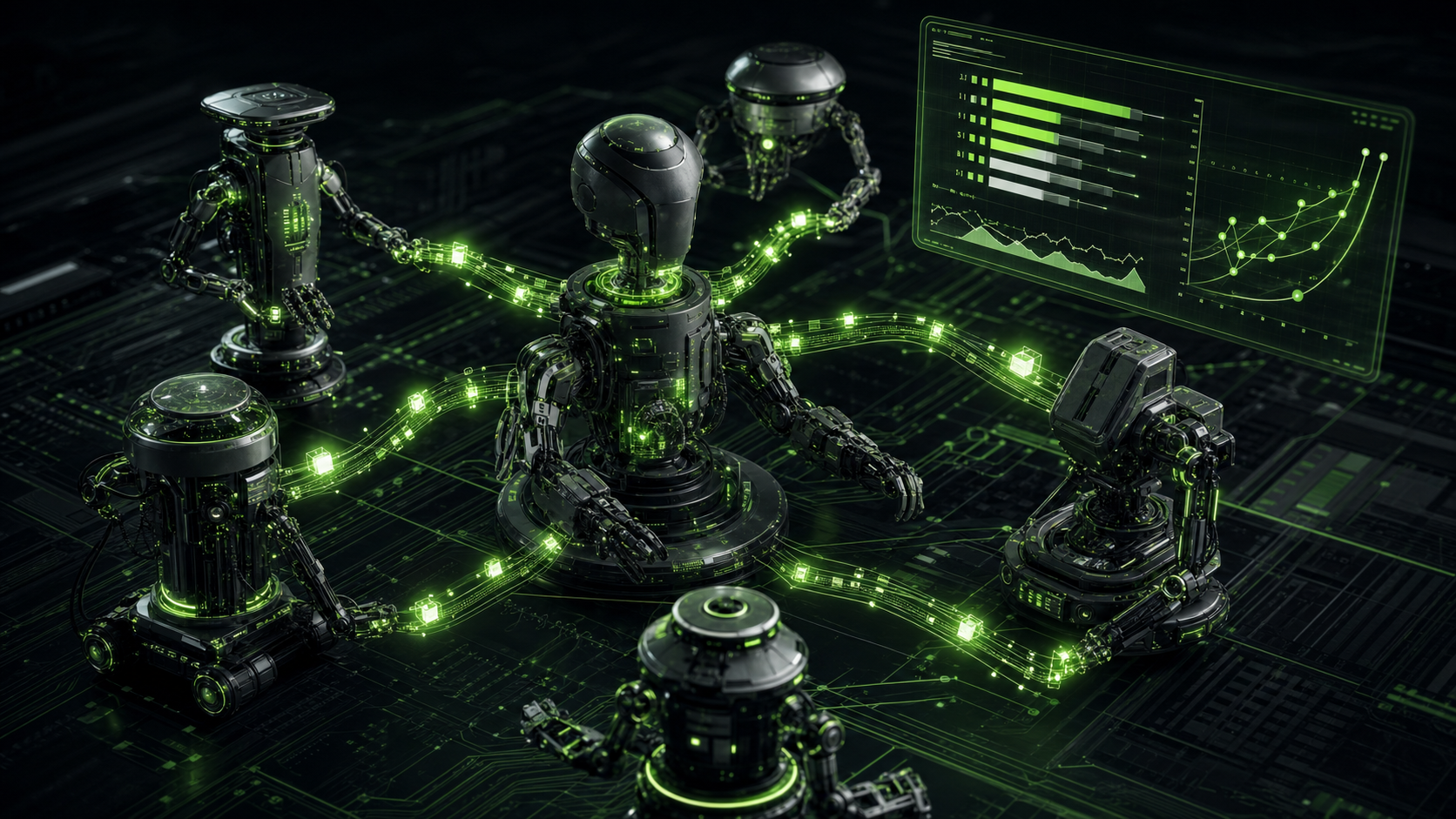
NVIDIA published benchmark results for Nemotron 3 Ultra claiming it leads open models on accuracy and efficiency in agentic tasks. This is significant: the open-model leaderboard for agentic workloads has been competitive, and a clear reference point helps builders decide when open is worth the inference overhead.
Why it matters. Running your own model instead of calling an API trades cost certainty for operational complexity. A benchmark-leading open model for agentic tasks — from a vendor with a stake in the inference infrastructure — changes the math for teams thinking about self-hosted agent pipelines. Treat the benchmark numbers as a starting signal, not a final answer: NVIDIA benchmarks NVIDIA products on NVIDIA hardware.
Also on the radar
- Token relay market. Simon Willison flagged a deep-dive into the underground market of AI token resellers and fraud — an economy of intermediaries arbitraging API access. Worth understanding if you're running a product that consumes third-party AI tokens at scale.
- Open Secure AI Alliance. Industry leaders including NVIDIA united around a new alliance focused on AI safety and security for open-source software. The aim: common security standards for open AI models that underpin commercial infrastructure.
- Cosmos-H-Dreams. NVIDIA's Cosmos simulation platform now supports real-time generative simulation for surgical robotics — physics-accurate digital operating rooms for surgical robot training without a physical robot present.
- Six agent harness capabilities. NVIDIA's developer blog published a breakdown of six architectural capabilities that consistently improve agent performance: structured routing, memory layers, tool orchestration, evaluation loops, fallback chains, and parallelism management.
Trends in dev tools
Agent harness design is becoming a discipline. NVIDIA's six-capability breakdown reflects a shift: building an effective agent is no longer about picking the right model, it's about the harness around it — routing, memory, eval loops. Teams that treat the harness as a first-class software artifact will outperform teams that bolt it together ad hoc. NVIDIA Developer Blog
Flash-Lite opens volume-tier economics. The introduction of Gemini 3.5 Flash-Lite continues the sub-cent-per-query trend that makes AI viable for high-frequency background tasks — log classification, quick summaries, lightweight routing. Developers building cost-sensitive pipelines now have a credible Google option at that tier. Google DeepMind blog
Open agentic models are closing the gap. Nemotron 3 Ultra's benchmark leadership signals that the closed/open performance delta on agentic tasks is shrinking. For builders who need reproducible, auditable agent behavior, self-hosted open models are becoming a real consideration — not just a cost play. NVIDIA Developer Blog
Security-specialized models are entering the product tier. Gemini Flash Cyber is the first Flash-tier model Google has explicitly positioned for a security domain. That's a product decision, not just a fine-tune — it signals a new category of narrowly specialized models shipping inside mainstream API families. Google DeepMind blog
Popular skills
Structured agent harness design. The pattern emerging from NVIDIA's six capabilities — routing, memory, eval, fallback, parallelism — is exactly the kind of repeatable skill that distinguishes agents that work in production from agents that demo well and fail in the wild. Building this as an explicit, testable component pays off fast.
Cost-tier model selection. Choosing between Flash, Flash-Lite, Pro, and specialized variants is a design decision with compounding cost implications at scale. Builders who develop intuition for when each tier is appropriate — and build evaluation pipelines that make that decision data-driven — are the ones shipping affordable AI products.
Security prompt engineering. With a security-specialized model now available in the Flash family, teams doing code review, vulnerability analysis, or adversarial testing have a new tool to evaluate. The skill is knowing how to prompt it for specificity — security reasoning is only as good as the threat model baked into the prompt.
AI fun fact
NVIDIA's Cosmos-H-Dreams simulation platform can generate physics-accurate digital operating rooms in real time — meaning a surgical robot can be trained on thousands of simulated procedures before it ever touches physical hardware. The system models soft-tissue deformation and instrument force feedback, not just visual appearance. It's being used by surgical robotics researchers as a physics simulator, not just a renderer. (Source: Hugging Face blog — NVIDIA Cosmos-H-Dreams)
Sources:
- Google DeepMind — Gemini 3.6 Flash, 3.5 Flash-Lite, 3.5 Flash Cyber
- OpenAI — How AI is expanding what people do at work
- NVIDIA — Nemotron 3 Ultra leads open models on agentic tasks
- NVIDIA — Six Agent Harness Capabilities
- Simon Willison / Vectoral — Token relay market
- Hugging Face — NVIDIA Cosmos-H-Dreams