The Igloo — Xbox's 'reset' lands, and the studios feel it
The biggest thing in games today is Xbox's 'reset' — Dishonored maker Arkane reportedly facing closure, Hitman studio IO Interactive cutting jobs, and State of Decay's Undead Labs up for sale, all while Microsoft insists it isn't spending less on games. Plus: a Dragon Age veteran calls generative AI a 'virulent plague,' GTA 6's developers force a union showdown, and why your next console is going to cost more.

Tuesday, June 30, 2026. The biggest thing in games today isn't a launch or a leak. It's a memo nobody has fully seen yet, and its shadow is already falling across some of the studios that made games you love. Microsoft's long-rumored Xbox "reset" started landing this week, and the cost is being measured in studios and jobs.
The lead · Xbox's "reset," and the studios on the chopping block
The reports came fast. Dishonored maker Arkane is reportedly facing closure if a buyer isn't found, with its Marvel's Blade project potentially canceled outright (VGC, Polygon). State of Decay developer Undead Labs was added to the list of studios said to be under threat, with State of Decay 3 — a game that was on stage at the Xbox Games Showcase and is in playtests right now — reportedly at risk of cancellation as a buyer is sought (IGN, Eurogamer). And the damage is already reaching outside Microsoft's walls: Hitman and 007 First Light studio IO Interactive confirmed layoffs after Xbox pulled support for its unannounced fantasy RPG, ending the partnership that was funding the project (Game Developer, IGN).
The part that stings most is the framing. Even as the closure reports stack up, an Xbox spokesperson is insisting the company expects to invest "about the same in content as we did last year" and is "not reducing our investment in games" (VGC). Not everything is on the pyre — Hideo Kojima's OD is reportedly safe from the reset (IGN) — but "we're not cutting" lands strangely on a week of cuts.
Why it matters to players. Studio closures don't just end one game; they scatter the specific people who know how to make a certain kind of game. Arkane's immersive-sim craft, Undead Labs' open-world survival design — that knowledge is hard to rebuild once a team disperses. For anyone who pre-ordered or wishlisted these titles, "at risk" is a genuinely uncomfortable place to sit. And it's worth being precise about the sourcing: most of this is reporting and insider claims, not confirmed announcements. The closures are reported; the layoffs at IO Interactive are confirmed. That distinction matters, and we'll hold it.
The fair read. It's easy to make a platform-holder the villain here, but the honest version is messier. The whole industry over-expanded during the streaming-and-subscription gold rush, and the contraction is hitting nearly everyone. The right anger isn't at "games" failing — players are spending more than ever — it's at how little the people who build them are protected when the strategy changes above their heads. Which leads straight to today's other big thread.
Generative AI is a "virulent plague," says a Dragon Age veteran
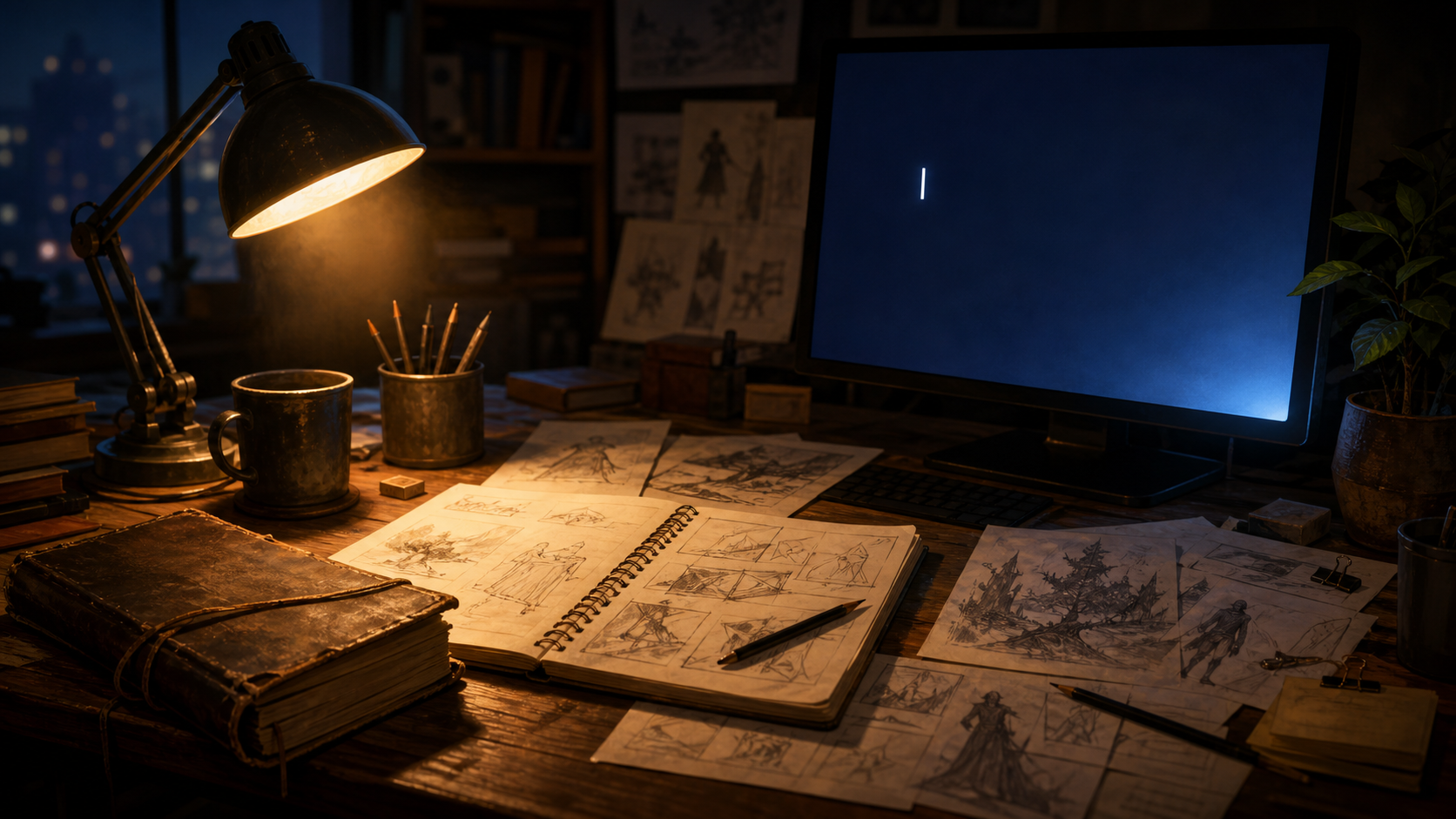
Here's the AI-gamedev angle, and it's a sharp one. David Gaider, the longtime lead writer on BioWare's Dragon Age series, came out hard against generative AI in game development, calling it a "virulent plague" in its current form (Rock Paper Shotgun). His most interesting point isn't the headline insult — it's his pushback on the friendliest case for the tech. Executives love to say AI will just handle the "drudgery" so creatives can focus on the good stuff. Gaider argues that even that has a hidden cost: a lot of so-called drudgery is where junior developers learn the craft, and where senior ones stumble into the small discoveries that make a game feel alive.
The take. You don't have to fully agree with him to take the point seriously. It's the same tension we keep landing on with AI tooling: the question is never just "can it do the boring part," it's "what do people lose when the boring part disappears." In a week when studios are being shuttered and headcount is the thing under pressure, a veteran warning that AI shouldn't become the excuse to hollow out the next generation of developers hits with extra weight. Fair to the tech, fair to the people — both can be true.
GTA 6's developers force a union showdown
While the cuts dominate the headlines, the people who make games are organizing in response. Developers at Rockstar have applied for voluntary recognition of the IWGB Game Workers Union, in a push to make the Grand Theft Auto 6 studio the second UK games studio with a recognized union (IGN). The ultimatum is concrete: Rockstar reportedly has around 10 working days to recognize the union voluntarily, or the matter may head to a UK government tribunal (Rock Paper Shotgun). It comes ahead of GTA 6's November launch and after last year's contested firings that organizers called union-busting.
The take. It's not only Rockstar. Rainbow Six Siege staff at Ubisoft Barcelona begin a series of Tuesday-and-Thursday strikes today, running through mid-July, over mass layoffs and return-to-office mandates (Rock Paper Shotgun). The same contraction driving the Xbox reset is driving the people underneath it to organize. That's the story behind the story this summer, and it's worth watching as closely as any release date.
Your next console is going to cost more
Quietly, the hardware math is getting worse. A well-regarded industry insider now estimates the PlayStation 6 will cost Sony roughly $1,000 just to manufacture (Eurogamer) — and Sony has signaled it no longer plans to absorb "significant" losses on hardware the way it used to (Eurogamer). Translation: if the build cost is near four figures, the price on the shelf is likely higher. A big reason is the same one squeezing PCs — a class-action lawsuit this week accuses Samsung, SK Hynix, and Micron of fixing memory prices and limiting supply as they pivot toward the high-bandwidth RAM that AI data centers are buying up (Eurogamer).
The take. It's an allegation, not a verdict, and one chipmaker has already said it will fight the claims. But the through-line is real and players keep feeling it: the AI boom and the console you want are now bidding on the same chips. Set expectations early — next-gen is probably going to ask more of your wallet than this generation did.
One more thing
Here's the warm note to close on. The Binding of Isaac: Rebirth — a roguelike that came out twelve years ago — just hit a brand-new all-time concurrent-player peak on Steam, powered by an absurdly good Summer Sale discount (Eurogamer). In a week of closures and contraction, a tiny, weird, endlessly-replayable game made over a decade ago is pulling its biggest crowd ever. Good games don't expire. That's worth holding onto.
This is the print twin of today's episode of The Igloo, The Penguin Alley's daily gaming show — the day's biggest stories and what AI is doing to games, fast and no hype. Browse the show and listen to today's episode here.
Sources: VGC (Arkane closure) · Polygon (Arkane / Blade) · IGN (State of Decay 3 risk) · Game Developer (IO Interactive layoffs) · VGC (Xbox 'not reducing investment') · IGN (Kojima's OD safe) · Rock Paper Shotgun (Gaider on generative AI) · IGN (GTA 6 union recognition) · Rock Paper Shotgun (Ubisoft Barcelona strike) · Eurogamer (PS6 build cost) · Eurogamer (RAM price-fixing suit) · Eurogamer (Binding of Isaac peak)