Cold Open — The AI margin collapse is already here
GLM 5.2 is the loudest signal yet that AI API pricing is heading toward collapse — the most-discussed HN story in weeks. Also: AMD's $4k on-device AI dev kit, and the Latent Space field guide that every Fable 5 builder needs to read. Plus dev-tool trends, the agent-skills wave, and one AI fun fact.

Tuesday, July 7, 2026. We scanned 1,118 items across our sources today; three made the cut — and the lead one is a pricing argument that 508 people on Hacker News spent 305 comments debating.
Listen to today's episode on the Cold Open podcast page.
The lead · GLM 5.2 and the AI margin collapse already in progress

A blog post by Martin Alderson titled "GLM 5.2 and the coming AI margin collapse" landed at the top of Hacker News overnight with 508 points and 305 comments — the most engaged AI-business story in weeks. The argument, compressed: Zhipu AI's GLM 5.2 (from Tsinghua University's AI lab) demonstrates that frontier-quality reasoning is now achievable with models that cost near-nothing to serve at scale, and the major labs' API pricing cannot hold.
GLM 5.2 competes on reasoning benchmarks with models costing 5–10x more per token. Alderson's case is not that GLM 5.2 beats GPT-5 or Fable 5 — it does not — but that it crosses a quality threshold that makes price the dominant purchasing signal for a large class of production workloads. When a model is good enough for your use case at a third of the price, the premium tier loses revenue fast.
"The margin collapse is not coming. It's already happening in the workloads no one talks about publicly: internal tooling, document processing, content pipelines, anything where 'good enough' is the spec." — summarized from the HN discussion
The comment thread added real texture. Multiple HN readers working at AI-using companies described already switching lower-stakes workloads to cheaper providers or open-weight models over the past two quarters. The frontier labs maintain pricing power on the hardest tasks — agentic coding, long-context reasoning, scientific work — but the mid-tier market is leaking faster than public numbers suggest.
Why it matters
For builders, the practical read is: route by task difficulty, not by habit. If your use case does not need frontier reasoning, frontier pricing is a tax you are paying because the default is set to the best model. Cost-aware routing — frontier for hard tasks, cheaper models for routine ones — is already standard at companies paying real inference bills. The tools to build it (Portkey, OpenRouter, LiteLLM) are mature. What has been missing is the business case; GLM 5.2 and its peers are now that case in numbers.
The second observation is competitive. The pace at which Chinese open-source labs are releasing high-quality models — Hy3 (295B MoE), GLM 5.2, Qwen families — is not slowing. The frontier labs' moat has always been data, scale, and iteration speed. The open-source ecosystem is narrowing the quality gap faster than the subscription pricing reflects.
The fine print
Alderson's piece is an argument with a point of view, not a measured analysis. The HN thread pushed back on several specifics: benchmark performance on standard evals does not always translate to production task performance, GLM 5.2's language support is uneven, and the margin collapse thesis has been predicted before without materializing on schedule. Jerry's caveat, honestly: the timeline for this collapse has been "just around the corner" for two years. But the direction is not contested — only the speed.
Sources: martinalderson.com — GLM 5.2 and the AI margin collapse · Hacker News discussion
02 · AMD Ryzen AI Halo — a $4k AI dev kit for on-device inference
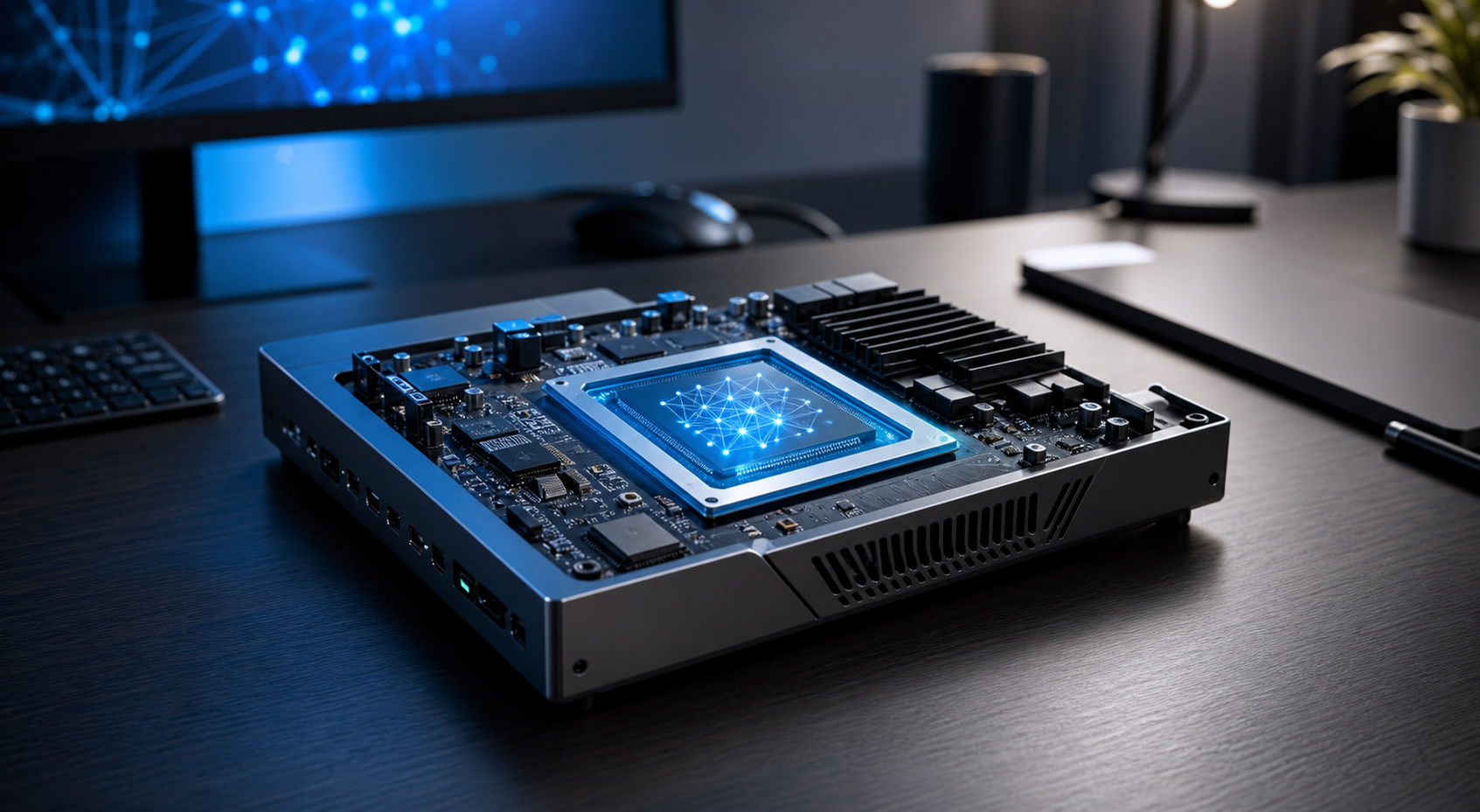
AMD announced the Ryzen AI Halo, a $4,000 developer kit built around their latest AI-focused silicon, and it landed at 345 points on Hacker News with 229 comments. The kit is aimed squarely at builders who want to run large models locally — the class of hardware that sits between a gaming laptop and a server rack, with enough NPU capacity to serve real inference workloads without a cloud bill.
The LTT Labs review compared its performance to Apple's M-series silicon (the current default for developer machines running local LLMs) and found it competitive on raw token throughput for mid-sized models. The GPU integration is tighter than previous AMD AI offerings, and the software stack is more developer-friendly than the hardware has historically been.
Why it matters. On-device inference is getting a second competitor that is serious. Apple's M4 chips have essentially owned the local AI inference market for the past two years because the hardware was good and the developer experience was usable. The Ryzen AI Halo is the first AMD offering where the HN comment thread is not full of "but the driver support..." complaints — it mostly isn't. For builders building private AI applications (where data cannot go to a cloud endpoint), or running models at cost zero during development, the hardware options just improved.
The $4k price point is still developer-kit territory, not mainstream. But AMD's historical pattern is to prove the hardware at dev-kit prices, then scale to consumer pricing within 18 months.
Source: lttlabs.com — AMD Ryzen AI Halo review · Hacker News
03 · The field guide to Fable 5 — what the model actually does differently

Latent Space's AINews published what they called "The Field Guide to Fable" — a structured technical digest of Claude Fable 5, covering capabilities, the real benchmark numbers, how it compares to GPT-5 and Gemini Ultra, and what is actually different for builders. The summary line from the post: "a quiet day lets us digest the world's most significant model launch... to date."
The guide is useful because it organizes what has been scattered across launch posts, benchmarks, and practitioner threads into a single reference: what Fable 5 is genuinely better at (long reasoning sessions, complex multi-step agentic tasks, maintaining context over very long sessions), what the caveats are (still over-refuses in some edge cases; Karpathy's "safeguards a little too trigger happy" observation held), and how to calibrate your use of it.
Why it matters. Fable 5 launched a week ago and most of the public coverage was launch-hype coverage. This guide is the engineering read — it tells you what to actually do differently with the model, not just that it scored well on benchmarks. If you are building anything serious with Claude Code, the multi-agent stack, or long agentic loops, the practical guidance in the field guide is worth an hour of your time.
Source: latent.space — The Field Guide to Fable
Also on the radar
- Tencent Hy3 — A 295B-parameter MoE model (21B active at inference) under Apache 2.0 license, flagged by Simon Willison. Trained on feedback from 50+ Tencent products. The full weights are 598GB to download, so this is primarily a hosted/API play for most teams. But the Apache 2.0 license makes it commercially usable. (simonwillison.net)
- OfficeCLI — An open-source CLI tool that lets AI agents read and edit Microsoft Office files (Word, Excel, PowerPoint) programmatically. 192 HN points, 56 comments. The target audience is anyone building agents that need to work with existing enterprise document workflows — a sizable real-world need. (github.com/iOfficeAI/OfficeCLI)
- NVIDIA + Hugging Face expand LeRobot — New models, simulation frameworks, and datasets added to the LeRobot ecosystem for open robotics development. Coverage includes new robot foundation models and an expanded simulation toolkit for the physical AI community. (blogs.nvidia.com)
- Small AI models gaining ground in disconnected environments — IEEE Spectrum covers how pharmaceutical companies are deploying small language models in regions with unreliable network infrastructure, where cloud API latency is unusable. SLMs as the default in connectivity-constrained environments is a pattern that is spreading beyond pharma. (spectrum.ieee.org)
Trends in dev tools
What moved today in the tools engineers actually ship with.
- It is not the model that breaks your coding agent — it is the scaffolding. A new paper (ArXiv 2607.03691) tracked how coding agent quality changes as the scaffolding layer evolves — system prompts, tool execution, context management, reasoning loops. The finding: scaffolding updates at "extreme velocities" cause quality regressions that are attributed to the model but are actually scaffolding bugs. The takeaway for builders: version your scaffolding with the same rigor as your model, and separate the two variables when debugging a regression. Source: arxiv.org
- Natural language tool descriptions outperform JSON schemas by 14.9 points. A replication study (NLT, ArXiv 2607.03953) validated across 14 models and 8,560 trials that describing tools in plain natural language improves tool-calling accuracy by 14.9 percentage points over structured JSON schema definitions, and reduces critical errors by 93%. This is counterintuitive — structured schemas feel safer — but the data holds across frontier, reasoning, and open-weight models. Source: arxiv.org
- SPORK: agents can speculatively execute tools while generating their next thought. A new technique (ArXiv 2607.03333) proposes self-speculative forking: while the model is generating its response after a tool call, it simultaneously predicts and begins executing the likely next tool call. This hides 16–37% of wall-clock wait time with no additional models or historical data required. Training-free, day-one deployable. Source: arxiv.org
- AgentGym2 exposes the gap between benchmark agents and production agents. A new benchmark (ArXiv 2607.05174) evaluates LLM agents in "de-idealized" real-world settings — noisy inputs, partial specs, tools that require setup rather than being pre-packaged. Existing agents perform significantly worse than their idealized benchmark numbers suggest. The lesson for teams productionizing agents: your eval environments are probably cleaner than real-world conditions, and the gap is where your incidents live. Source: arxiv.org
Popular skills
The agent-skills wave — portable instruction folders a coding agent loads on demand — surfaces new patterns today.
- Trace-level procedural compliance is becoming a first-class eval concern. AgentLTL (ArXiv 2607.02599) proposes verifying not just whether an agent got the right answer, but whether it followed the right procedure to get there. For safety-critical tool-use (finance, medical, legal), the path matters. AgentLTL scores procedure compliance with linear-temporal-logic expressions over agent traces — a judge-free, deterministic score that can run in CI. Source: arxiv.org
- "Your agent's memories are not its own." A security paper (ArXiv 2607.05029) describes forged-reasoning attacks: injecting manipulated content into an agent's memory store to control its future behavior without the agent or user detecting it. The pattern — poison the memory, steer the agent — works reliably against current retrieval-augmented agent architectures. Skills that handle external data need explicit memory validation. Source: arxiv.org
- NLT as a drop-in upgrade for tool definitions. The 14.9-point accuracy improvement from natural language tool descriptions holds across 14 tested models. This is a zero-infrastructure change: rewrite your tool descriptions from JSON schema format to plain English instructions, run your eval suite, and measure. The gains are real and immediate — no fine-tuning, no infrastructure change. Source: arxiv.org
AI fun fact
Tencent's Hy3 model has 295 billion parameters total but uses only 21 billion at inference time — a Mixture-of-Experts architecture that routes each token to a relevant subset of the network rather than passing it through all weights. The full model weights are 598 gigabytes to download. At the average home internet speed in the US (~200 Mbps), that download takes about 6.5 hours — enough time to listen to Cold Open roughly 2,600 times. The Apache 2.0 license means anyone can try once the download finishes.
Source: simonwillison.net — tencent/Hy3 · hf.co/tencent/Hy3
Sources
- GLM 5.2 and the AI margin collapse — martinalderson.com · Hacker News
- AMD Ryzen AI Halo review — lttlabs.com · Hacker News
- The Field Guide to Fable — latent.space
- Tencent Hy3 — simonwillison.net
- OfficeCLI — github.com/iOfficeAI/OfficeCLI
- NVIDIA + HF LeRobot — blogs.nvidia.com
- Small AI models / unreliable networks — spectrum.ieee.org
- Scaffolding shapes coding agent quality — arxiv.org
- NLT replication study — arxiv.org
- SPORK speculative forking — arxiv.org
- AgentGym2 — arxiv.org
- AgentLTL — arxiv.org
- Forged reasoning attacks — arxiv.org