The Igloo — Your Old Xbox Games Are Finally on PC (Sony, Take Notes)
Xbox backward compatibility lands on PC today with four classic titles — a long-overdue win for players. Meanwhile, Sony's disc exit puts a $7.2bn used-game market in jeopardy, Hasbro cancels upcoming games after a $56M write-down, and Unity reveals its next engine with a notably careful AI stance.
Tuesday, July 22, 2026. The biggest thing in games today: Microsoft just opened up a vault of classic Xbox titles for PC — and the timing is hard to ignore.
The lead · Xbox backward compatibility is now a PC thing
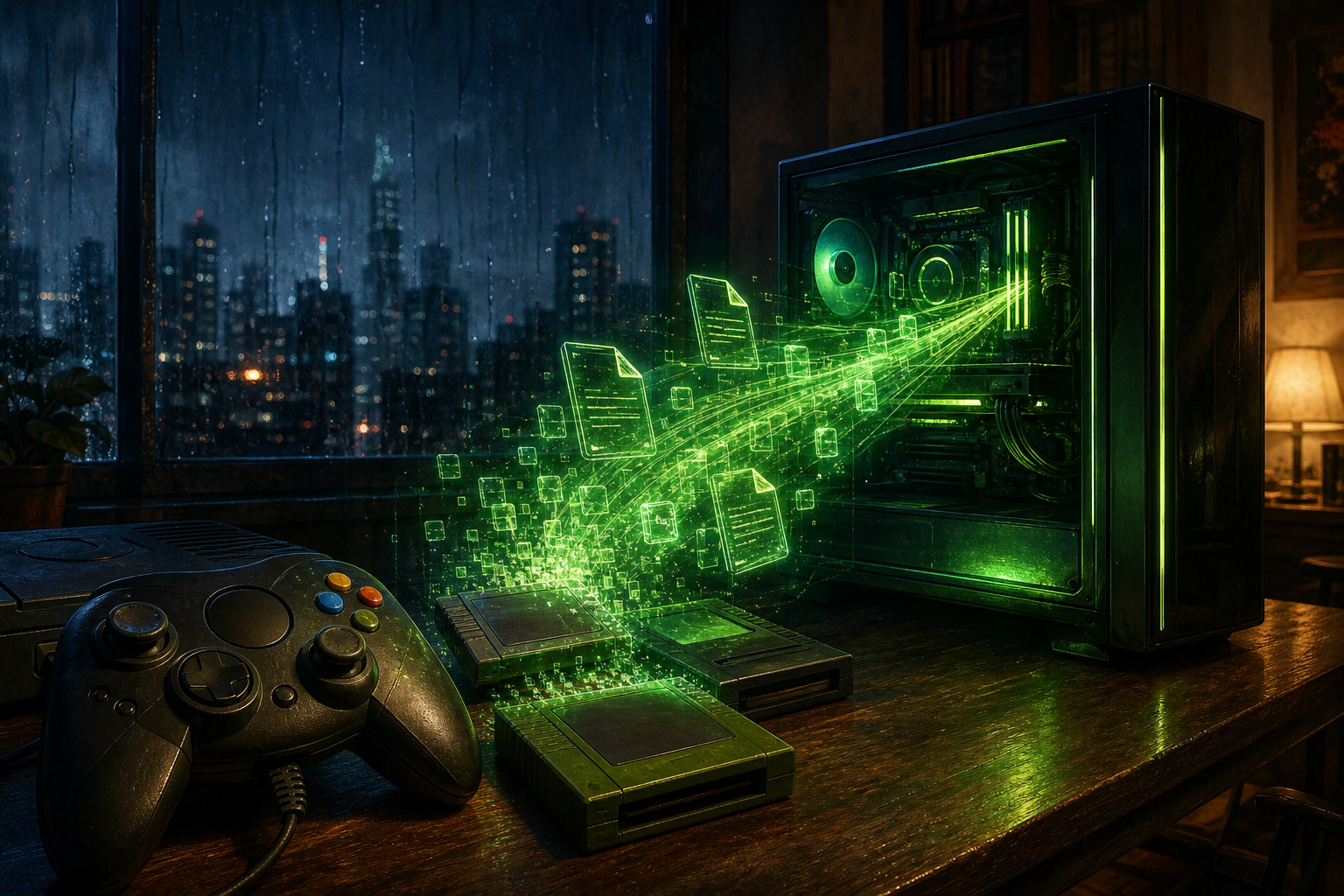
After years of being a console-only perk, Xbox Backward Compatibility is launching on PC, starting today with four original Xbox classics: Blinx: The Time Sweeper, Fuzion Frenzy, and Conker: Live and Reloaded are among the first wave, with achievements coming for original Xbox titles in the future. The program works on PC and handheld PCs like the Xbox Ally X.
The player win here is real. Original Xbox games are notoriously hard to run on modern hardware without emulators, and Microsoft is doing the preservation work to bring them forward officially — achievements and all.
The industry angle is harder to read. This announcement drops just weeks after Microsoft cut 3,200 jobs and shuttered four studios. Eurogamer noted plainly that Xbox is "rethinking its whole strategy even if the more recent comments from inside the house still sound confused at best." Giving PC players access to old catalog games is a solid move. It's also the kind of goodwill play you make when the bigger story is messy.
More titles and features are promised. For now: if you ever wanted to play Conker: Live and Reloaded on a Steam Deck, your moment has arrived.
Sources: VGC · GameSpot · IGN · Eurogamer
Sony's disc exit could wipe out a $7.2 billion market
Sony confirmed it is ending PlayStation disc manufacturing by January 2028, and the consequences are bigger than most people realized at announcement. Analysts now estimate the used video game market — trade-ins, second-hand stores, GameStop-style retail — is worth $7.2 billion globally, and a discless future puts all of it at risk.
The Disgaea series creator Sohei Niikawa put it most directly at Anime Expo 2026: if Sony is done with physical media, "they might as well stop making PlayStation hardware too." His point is about value — a disc is a thing you own, trade, lend, resell. A license you stream is none of those things.
This is a story that matters to players across every price bracket, not just collectors. Pre-owned games are how a lot of people afford this hobby. Physical sales are already weak — only seven PlayStation games crossed 100,000 physical units in the US this year — so Sony has a data point backing the move. Whether that data point justifies wiping out the resale market is a different question.
Hasbro writes off $56M and bets on fewer, bigger games
Hasbro recorded a $56 million impairment charge after cancelling "several" video games that were slated for 2028 and beyond. The company says it is doubling down on projects with "franchise potential and meaningful opportunities beyond the initial game" — which is a corporate way of saying: no more bets on mid-tier new IPs.
The notable carve-outs: Exodus and Warlock are both safe. The scrapped titles were projects further out, none named publicly.
Hasbro owns Wizards of the Coast (Dungeons & Dragons, Magic: The Gathering) and backs Archetype Entertainment's Exodus. The pivot to "franchise potential" signals that the entertainment giant is treating games more like studios treat movie franchises — establish the IP first, worry about new things later. The craft cost: developers working on those cancelled projects just found out their games won't ship. That doesn't appear in the impairment number.
Sources: Game Developer · Rock Paper Shotgun · GameSpot
Unity 7 lands — with a careful stance on generative AI
Unity revealed Unity 7, the next version of its game engine, and the headline from developers watching is what it doesn't do: it doesn't make generative AI mandatory or even central. Unity's own framing — "built for that world doesn't mean built to require it" — reads as a deliberate reset after two years of moves that ranged from controversial to chaotic.
The announcement promises faster workflows and better visuals. More importantly, it arrives without the runtime-fee or AI-mandate controversy that has followed Unity since 2023. Rock Paper Shotgun's read: "it doesn't appear to ruin anything" — which is, genuinely, exactly what Unity needed to say.
For the AI-gamedev angle: Unity sitting this careful is a real data point. Generative AI tooling is available, studios can opt in, but no major engine is forcing it into every workflow yet. That window won't last forever.
Source: Rock Paper Shotgun
One more thing
Count Binface — a UK independent candidate who appears in public dressed as a trash can — has formally added Shenmue 4 to his campaign platform, pledging to petition Sega if elected MP for Clacton. The Shenmue community has responded warmly. This is, genuinely, real political news from 2026. (GameSpot)
Listen to today's episode on The Igloo podcast.
Sources: VGC · GameSpot · IGN · Eurogamer (backcompat) · Eurogamer (discs) · GameSpot (discs) · Game Developer · Rock Paper Shotgun (Unity)